Analyzing Marketing Data: Turning Insights into Strategy
Did you know that analyzing marketing data in today’s digital landscape helps you understand what truly happens behind every click, every visit and every…
Read the article
What is 360 marketing? It’s the strategy that puts your brand everywhere your audience is consistently, and with one unified message. Not just on Instagram, not just on Google, not just in your physical store. Everywhere, at the same time, with the same voice.
In this guide, we’ll break down what 360 marketing really means, how it works in practice, and why businesses that apply it properly tend to outperform those that don’t.
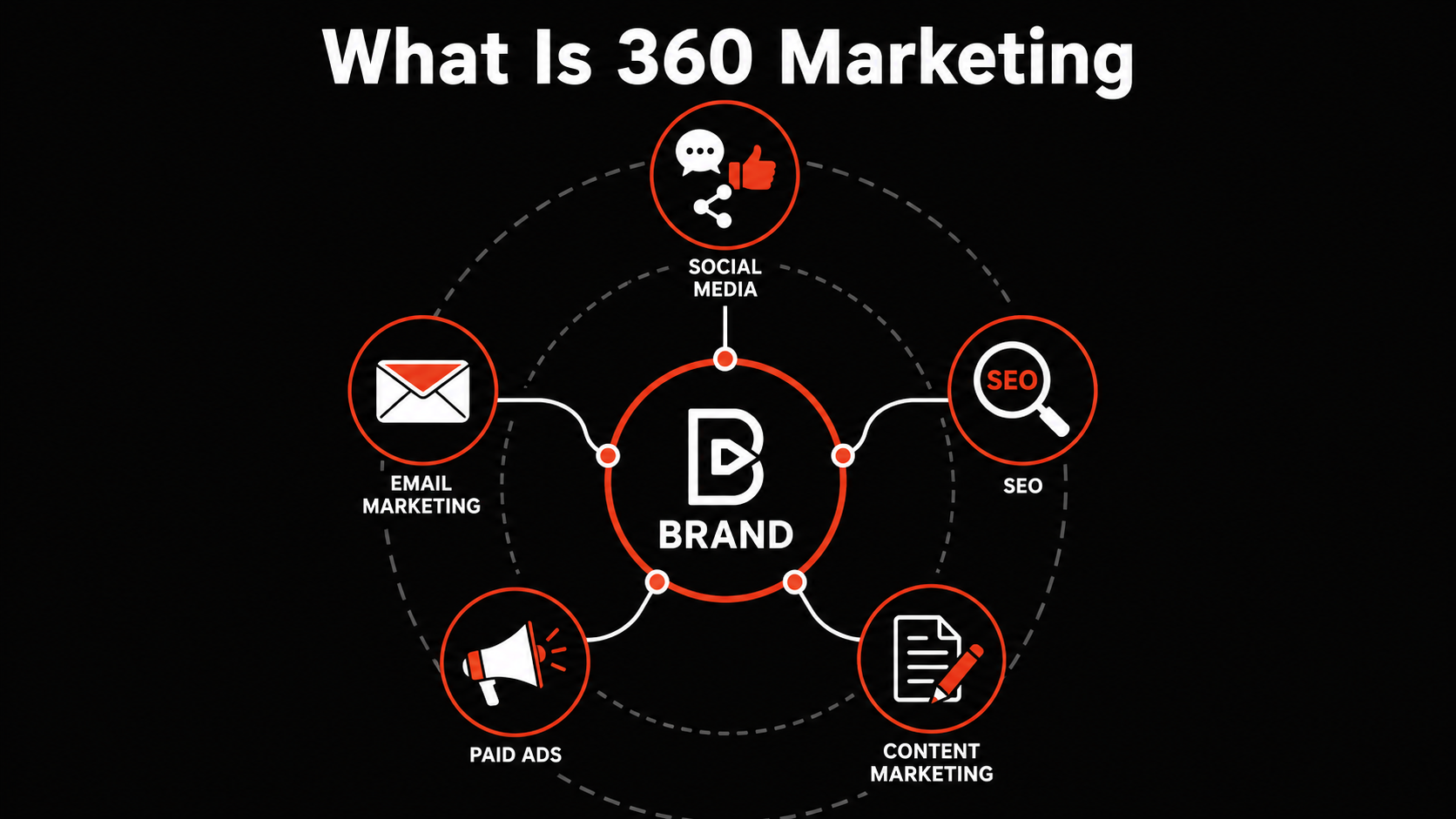
Every channel is part of one bigger picture. Your website, your ads, your social media posts and even your in-person interactions all carry the same brand DNA. Nothing exists in isolation.
Your audience doesn’t live on one platform, so your marketing shouldn’t either. A 360 strategy spans social media, email, SEO, paid ads, content and traditional media, creating multiple touchpoints that reinforce each other.
The message stays the same whether someone finds you on Instagram, Google, or walks past your store. Consistency builds recognition, and recognition builds trust.
Every interaction a customer has with your brand, from clicking an ad to receiving an email to calling your office, should feel smooth and intentional. Good UX isn’t just for websites.
Data lets you speak to different segments of your audience in ways that feel relevant to them. The right message, to the right person, at the right moment.
You can’t improve what you don’t measure. 360 marketing tracks performance across every channel, giving you a complete picture of what’s working and what needs adjusting.
Marketing, sales, content, and customer service need to operate as one unit. When teams are aligned, the customer experience reflects it.
Markets shift. Trends change. A 360 strategy allows you to adapt quickly — adjusting campaigns, messaging, or budget allocation without losing momentum.
360 marketing is never “done.” It’s a cycle of testing, learning, and refining. The brands that commit to this process are the ones that keep growing.
When all your channels work together, the results compound. Here’s what that looks like in practice:
Your brand becomes impossible to ignore. Customers who see you on Instagram, then find you on Google, then receive your email don’t just remember you — they trust you. Repetition across channels creates familiarity, and familiarity drives decisions.
Your budget works harder. When channels are aligned, each one reinforces the others. A customer who saw your ad is more likely to open your email. A customer who read your blog is more likely to click your Google Ad. Nothing works in isolation — and that’s the point.
You get a complete picture of your customer. Data from multiple channels gives you insights that a single-channel approach never could. You start to understand not just who your customer is, but how they move, what they respond to, and when they’re ready to buy.
360 marketing isn’t without its difficulties. The most common challenge is consistency. With multiple channels in play, maintaining the same tone, visuals, and message across all of them requires clear brand guidelines and tight coordination between everyone involved.
It also requires investment — not just in tools and platforms, but in time. Managing a 360 strategy is not a part-time job. It demands ongoing attention, regular analysis, and the willingness to adapt when something isn’t performing.
Finally, the volume of data generated across multiple channels can be overwhelming without the right systems in place. Knowing which metrics matter and how to act on them is a skill in itself.
The good news? These are exactly the challenges that a good agency exists to solve.
To conclude, 360 marketing isn’t a luxury reserved for big brands with large budgets. It’s a strategic choice that any business can make — to stop treating their channels as separate efforts and start building something that works as a whole.
If you’re ready to stop doing marketing in pieces and start doing it properly, we’re here to help.
Contact Inglelandi today and let’s build your 360 strategy together.
It’s an integrated marketing strategy that connects all your channels — online and offline — into one unified, consistent approach designed to reach your audience at every touchpoint.
Stronger brand recognition, higher customer trust, smarter use of your budget, and a complete understanding of your customer journey.
Begin by auditing your current channels, defining your brand voice and visual identity, then build campaigns that connect across all touchpoints. Measuring results from the start is essential.
Absolutely. The scale adapts to your resources. A small business doesn’t need to be on every platform — it needs to be consistent on the ones that matter most for its audience.
Traditional marketing typically focuses on one or two channels in isolation. 360 marketing creates a connected experience across all of them, with the customer journey at the center.
Related articles
Did you know that analyzing marketing data in today’s digital landscape helps you understand what truly happens behind every click, every visit and every…
Read the articleIn today’s digital scene, reviews on Google play a decisive role in the success of any business. They directly shape how customers perceive your…
Read the articleIn today’s travel landscape, digital marketing for hotels is not just an advantage; it’s a necessity. Modern travelers search, compare, and book almost entirely…
Read the articleFill in the form for any question or advice you need for your business.
Get in touch