
What is a hook in video? It’s the first thing that makes someone stop scrolling and start paying attention. In today’s fast-moving digital world, viewers decide within seconds whether they’ll keep watching or move on to the next video. That’s why the hook is one of the most important parts of any video strategy. Whether you’re creating TikToks, Instagram Reels, YouTube Shorts, or promotional videos, a strong hook can improve engagement, watch time and conversions.
In this article, you’ll learn what a video hook is, why it matters, and how to create hooks that capture attention and keep viewers watching.
Why is the Video Hook Important?
To begin with, online attention spans are shrinking. In video marketing, the first 3 seconds are often the most important part of your content. This is the moment when viewers decide whether to keep watching or scroll away.
That’s why your hook needs to communicate value quickly. Meta recommends featuring your brand and key message within the first 3 seconds, while TikTok advises introducing your content proposition in the first 3 seconds to improve recall and awareness.
Without a strong hook, even the most polished video can go unnoticed. An effective video hook can:
- Increase engagement: When people are hooked from the start, they’re far more likely to watch until the end.
- Improve watch time: Platforms like YouTube, TikTok, and Instagram reward videos that hold attention longer.
- Boost conversions: Whether it’s a sale, sign-up, or share, keeping viewers engaged means higher chances they’ll take action.
Types of Video Hooks That Work
Different types of video hooks work depending on the platform, audience and goal of your content. However, the most effective hooks usually create curiosity, emotion, or immediate value within the first few seconds.
1. Question Hooks
Questions naturally encourage viewers to keep watching because they create curiosity. A strong question makes the audience feel personally involved in the content. For example:
“Did you know most viewers decide within 3 seconds if they’ll keep watching?”
This type of hook works especially well for educational, marketing and problem-solving content.
2. Shock or Surprise Hooks
Unexpected visuals, bold statements, or unusual situations instantly grab attention and interrupt scrolling. These hooks are commonly used in short-form content on platforms like TikTok and Instagram Reels because they create an immediate emotional reaction.
3. Problem-Solution Hooks
One of the most effective strategies in video marketing is highlighting a common problem and immediately hinting at a solution. For example:
“Struggling to get views on your videos? Here’s what might be ruining your engagement.”
This type of hook works well for brands, tutorials and service-based businesses.
4. Storytelling Hooks
Starting in the middle of a story creates curiosity and encourages viewers to stay until the end to discover what happens next. Storytelling hooks help build emotional connection and are especially effective for brand storytelling, testimonials, and lifestyle content.
5. Statistic Hooks
Numbers and statistics instantly add credibility and make viewers pay attention. For example:
“80% of users stop watching a video within the first few seconds.”
This type of hook is especially useful for educational, business, and marketing-related content because it combines information with urgency.
How to Create an Engaging Video Hook
A strong video hook should be clear, fast and relevant. The goal is to give viewers a reason to keep watching within the first few seconds.
Start by thinking about your audience’s main question, problem, or desire. What would make them stop scrolling? Then, turn that idea into a short opening line or visual moment that creates curiosity. To create a stronger hook:
- Keep it short: Avoid long introductions and get to the point quickly.
- Lead with value: Show viewers what they will learn, gain, or understand by watching.
- Use a strong first visual: Movement, contrast, facial expressions, bold text, or unexpected scenes can help capture attention faster.
- Create curiosity: Tease the result, mistake, tip, or transformation without revealing everything immediately.
- Match the hook to the content: Avoid clickbait. The rest of the video should deliver on what the hook promises.
A good hook doesn’t need to be complicated. It simply needs to make the viewer think, “I want to see what happens next.”
How Video Hooks Can Increase Your Sales
A strong video hook does more than improve views. It can directly impact business results.
First, it builds trust. When you deliver value from the very first seconds, viewers feel more confident that your brand understands their needs and respects their time. It also improves watch time and retention, which helps social media algorithms promote your content to a wider audience. The longer viewers stay engaged, the higher the chances they’ll interact, share your content, or make a purchase.
Finally, a strong hook naturally supports your call to action. Once attention is captured, guiding viewers toward the next step becomes significantly easier.
Common Video Hook Mistakes
Even high-quality videos can underperform if the first few seconds fail to capture attention. Some common mistakes include:
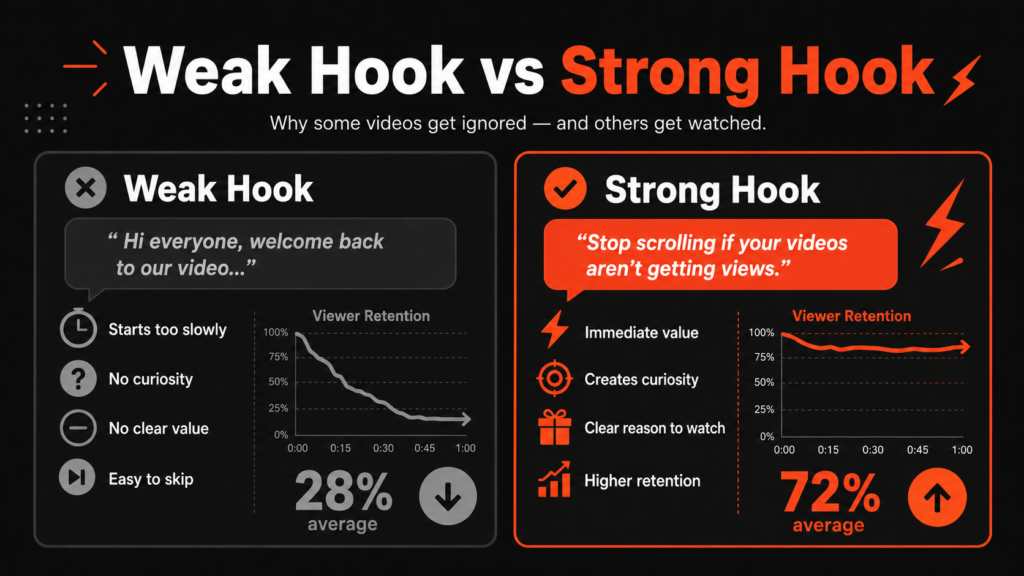
- Starting too slowly
- Using long intros or logos at the beginning
- Failing to create curiosity
- Using misleading clickbait
- Not communicating value quickly enough
A successful hook should feel natural, engaging, and immediately relevant to the audience.
Examples of Effective Video Hooks
Here are a few examples of hooks commonly used in social media and video marketing:
- “Stop scrolling if you want better engagement on your videos.”
- “This simple marketing trick doubled our sales.”
- “You’re probably making this video mistake.”
- “Here’s why most videos fail within the first 5 seconds.”
Practical examples like these help capture attention quickly while giving viewers a clear reason to keep watching.
Conclusion
Frequently Asked Questions (FAQs)
1. What exactly is a video hook?
It’s the opening part of a video designed to grab the viewer’s attention and keep them watching.
2. How long should a video hook be?
Usually between 3–10 seconds, just enough to make a strong impression.
3. Can I use video hooks for all types of videos?
Absolutely. Whether it’s promotional, educational, or entertainment content, a good hook always works.
4. What tools can help me create better hooks?
Tools like Canva, CapCut, Adobe Premiere Pro, and iMovie can help you design impactful visuals and edits.
5. What makes a video hook effective?
A good hook creates curiosity, delivers value quickly, and gives viewers a reason to keep watching.
6. Do video hooks help with social media algorithms?
Yes. Higher watch time and engagement signals often help platforms promote videos to larger audiences.